
So You’re Using Nicaea Now
Questions about the implications of new creedalism.

Part of a talk I gave on November 19 at The Evangelical Theological Society in Boston. Read part 1 here: “Why Evangelicals Are Recovering Nicaea.”
I have some questions about historically non-creedal churches using historic creeds. There are some things—some implications—that haven’t been addressed, I don’t think, in the midst of all the new love for Nicaea.
There may well be answers to these questions. I suspect different groups have different answers, which would be interesting and tell me something about the landscape of contemporary evangelicalism. I’m not saying the questions couldn’t be answered. But they’re not being answered. And I’ve found myself at several points wondering about implications that I’d like to at least name. These are four questions I have.
One: Is the Nicene Creed going to be used as a test for fellowship? That’s one of the key, historic uses of creeds. They are not just articulations of theology, but tests of orthodoxy. Admittance to the Lord’s Table, church membership, church leadership, and cooperation between churches has required creedal confession, sometimes even with quizzes. The creed is used for a test.
But right now, for example, a Southern Baptist congregation can be challenged for its failure to follow (or really follow) the Baptist Faith and Message but there’s no mechanism I’m aware of and certainly no practice of challenging congregations for failure to adhere to Nicaea. Even the push to get the convention to adopt Nicaea in some way wasn’t, to my knowledge, aimed at making it a test.
I’m not trying to pick on Baptists. I don’t think the nondenominational churches who are using the creed are quizzing ministerial candidates about their understanding of the procession of the Holy Spirit, for example, or what “light from light” means. I’m not aware that they’re requiring ministry partners all sign-on to Nicaea—“sorry we can’t buy your Sunday school material anymore, we noticed you don’t have the creed on your website.” That’s not what’s happening.
But why not?
Isn’t one implication of beliefs about the council and the creed, and the use of the creed in worship and as a statement of faith, that it would be good to use it as a test for fellowship? To me, at least, that seems like an implication.
A second question I have is about authority. In my non-creedal church, which is part of the Stone-Campbell, no-creed-but-Christ tradition, we would say that Nicaea is correct, but kind of accidentally. The bishops happened to articulate the truth of scripture but the processes of a council are not trustworthy. You shouldn’t lean on the specifics of the creed too hard. The procedures can’t be counted on to keep your cows fenced, as it were.
It’s not clear to me, with these new adoptees, what investment they have in the ecumenical councils. Even evangelical Anglicans, I think this is a question. Is it the case that the council could not have been wrong? That the Holy Spirit guaranteed the gathering of bishops would come to the right answer?
One way to explore this is to ask about the status of the canons. If you’re a nondenominational megachurch in Colorado using the creed as statement of faith, I guess you think they’re mostly just irrelevant. But canons 11, 12, and 14, for example, institute a process for readmission of people who’ve fallen away from the faith, and that does happen in contemporary churches. Why are those rules not applicable?
And, for Anglicans, what is the authority of canon 20, which prohibits kneeling on the Lord’s Day? Was Nicaea wrong about that? I’ve never seen a conservative Anglican. church in America where people don’t kneel on Sundays, but the council that made this decision about orthodox theology also said it was very important the Christians not do that. Does the council have authority over orthodoxy but not orthopraxy?
It seems to me there’s a kind of resurrection of conciliarism, in the way evangelicals who like the creed talk about the creed, but it’s very ad hoc concilarism. Or what am I missing?
And then another question about authority: What is the status of tradition? And does it matter that the actual history of the creed is pretty messy?
Sometimes, I hear an account of the creed where it sounds like the authority comes from time and ubiquity. Like, the creed is proven correct by the fact it’s been used for thousands of years and all over the world. I can’t tell, though, if that’s just sort of rhetoric or there is some emerging investment in the authority of historicity. One of the hallmarks of evangelicalism has been a suspicion of tradition and arguments from tradition. Are churches that embrace Nicaea, as part of this resurgence, moving away from that? Are they embracing tradition as a good justification for something? I’m not sure. I think it’s an interesting question.
I also find myself raising my eyebrows at the too-neat historical accounts of the creed. My sense, reading a bit of church history, is that the claims about the universal acceptance of the creed won’t stand up to much scrutiny. Unless that’s a tautological claim, not a historical one.
Historically, in the immediate aftermath of the council, Nicaea was not adopted or enacted in any meaningful way. Pretty much, the church in 375 ignored the new creed. It was like, good for you. Some churches seemed to think it just wasn’t relevant to them. Others, that the council did not have any authority to correct the doctrines they understood to be the traditional doctrines passed down from the apostles.
And then, go a little further, you find that even when the church did “universally” condemn Arianism, it was not always exactly a thoroughgoing condemnation. Look at a Goth like Theoderic, who was all-but Western Roman Emperor in the early 500s. He not only had the power but apparently authority to intervene in a church schism, convene a church synod, and exert considerable influence over the appointments of two popes. He was Arian. He was beyond the bounds and bonds of Nicaea. That didn’t matter.
There are other debates we could get into. History is messy. Claiming the creed is authoritative because of its historical status seems shaky, at least.
That’s three questions: Is the creed useful for tests of fellowship? Why is it authoritative / what is the operative theory of authority? And much does the messiness of history matter?
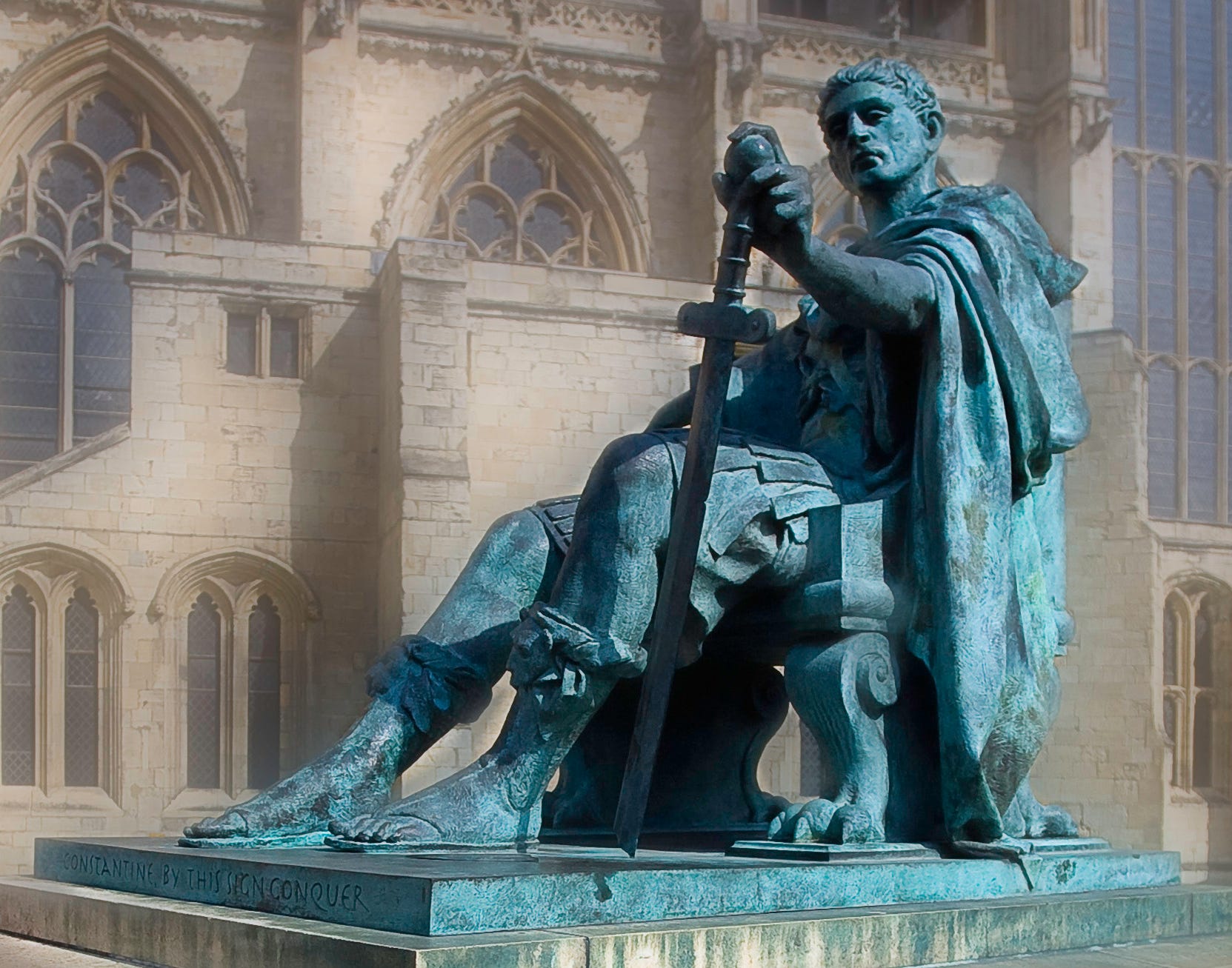
And finally, what is to be made of the Constantine of it all?
I think it’s coincidence this resurgence of interest in the creed is happening at the same time people are debating Christian nationalism. But does this revived creedalism have implications for the way evangelicals think about the proper relationship between church and state? The proper use of civil power? Or the value or even necessity of that power to protect orthodoxy?
There’s extended historical debate, of course, about the authenticity of Constantine’s conversion and his role in the council and the specific formulations of doctrine in the creed. But it seems clear this statement of orthodoxy wouldn’t have been possible without the emperor claiming responsibility for Christian unity and insisting on the importance of catholicity. He made Nicaea happen.
If that’s necessary for the most important statement of Christian belief and a clear, articulation of essential, fundamental doctrine, isn’t an emperor necessary? Isn’t the implication that we need that kind of imperial authority ?
Maybe that doesn’t seem fair to draw that implication. But note this is what Thomas Cranmer believed. The first archbishop of Anglicanism said the early church had to muddle through until it finally got a Christian prince. The apostles lacked a “remedy … for the correction of vice, or appointing of ministers.” To me, it seems crazy to imagine Paul quarreling with Peter, say, and thinking to himself, I sure wish I could get the emperor involved. But Cranmer wrote a pretty good Book of Common Prayer, and he thought Henry VIII and Constantine were necessary for proper Christian order.
If you think the council and creed that only happened because of Constantine are necessary for orthodoxy … but don’t think Constantine is necessary for proper Christian order … why?
Again. I’m not saying there aren’t possible answers. But I’d like to hear the newly creedal evangelicals wrestle with these questions, at least a little. The implications, at least to me, do seem to be implying.
Or maybe we just don’t care? That would tell me something interesting about contemporary evangelicalism too, and the landscape of felt-needs, and what evangelicalism is right now.
Thanks for the discussion of the Creed. I’m an evangelical but have been committed to the creed for years. I do think we have to give some thought to Vincent of Lerins’ description of the faith confessed “everywhere, always, and by all.” He didn’t mean that no one challenged the orthodox faith. He meant that, despite challenges, it had persisted over time. There is something to be said for the persistence of Nicene orthodoxy among Orthodox, Roman Catholic, and many Protestant traditions. This faith has helped to sustain the church through many different iterations across the centuries. Forms of liberal Protestantism that have attempted to modify profoundly these basic Christian faith claims have not fared well.
Loving this series, Daniel!