
Shame the Devil
And pray for people to be faithful to the responsibility of their calling.

I have liked this quote for a while without knowing where it comes from: “Tell the truth and shame the devil.” The phrase captures my sense of the sacred call of the work of reporting on Christian abuse and scandal as a Christian, knowing the reporting will bring pain and distress to good people, my people, my tribe, and believing it’s important, faithful even, to do it anyway.
So I wanted to know where this quote’s from. Sometimes it’s attributed to William Shakespeare. He did know how to turn a phrase and he did write it. The line appears in Henry IV, in the mouth of a character named Hotspur: “O, while you live, tell truth and shame the devil!”
But there’s an older attribution too. I’ve seen it said the phrase comes first from English Protestant reformer and martyr Hugh Latimer. Latimer seems like someone who would say something like this. He was stubborn, determined to follow his own conscience to the fiery end. He was often defiant—something I identify with, for better and worse.
I read that Latimer once preached a sermon that offended King Henry VIII. He was told to apologize in his next sermon. Instead he preached the offending sermon a second time, repeating everything he’d said. Defiant like that.
Latimer believed you should accept correction, but never authority for authority’s sake. Not even when it was very painful.
The quote about telling the truth, damn the consequences, is attributed to him again and again without citation, though, which made me suspicious he didn’t really say it. And if you’re going to quote a saying about the truth, you want it to be a true one. At least I do. So I tracked it down—and he did say it.
The phrase comes from a sermon Latimer preached to King Edward, and appears on page 85 in a series of sermons published about 30 years before Shakespeare’s play. Latimer was preaching about the spiritual armor and “the christen mans pylgrimage,” the Christian life, and the responsibility of speaking the truth.
Revised with modern spelling, Latimer said:
There is a common saying among us, ‘Say the truth and shame the devil.’ Every one, man and woman must fight against the devil. But we [people who have positions of authority ] … must rebuke men, and spare no man: our office is to teach every man the way to heaven. And whosoever will not follow, but lies still in sin, him we ought we to strike and not to spare, like John Baptist did when he said to the great and proud king … non licet tibi, ‘Sir it becomes you not to do so.’ So we … may not be flatterers or clawbacks.
There it is!
Latimer wasn’t talking about journalists when he preached that in the 1500s, but the principles apply. Don’t be a sycophant, he’s saying. Don’t accept argument from authority. If you have the privilege to speak to people with power to take your head, you have a responsibility to speak the truth.
Do that, and you’ll shame the devil.
Tear Down that Wall
Here’s an interesting experiment in modern newspapering: The Salt Lake Tribune is dropping its paywall and adopting a membership model. People can agree to pay $5 to $26 per month, get a range of extras—and subsidize the paper for everyone.
The idea is that readers will pay so there’s good reporting in the world. They are not trying to pay for special, restricted access to that good reporting. If you like good reporting, you probably want other people to have it too? The theory is you’ll pay and want to share. Call it the sharelink hypothesis.
It seems like it might work?
In a test, the paper found that 87 percent of current subscribers were willing to convert to a membership, continuing monthly payments even when they could get the Tribune for free.
Part of the story, though, is that the Tribune is a nonprofit. Corporate-owned media might not be so eager to make the switch. But for nonprofits, maybe there’s a future without paywalls.
Recent Work
On the podcast where I explain the news to my minister who doesn’t follow the news:
An update on the civil war in Sudan.
An update on the aftermath of the civil war in Syria.
Light of the Father and the Son
Imagine a candle—the light of a flame. Now imagine a beam of light shining from the flame. I think that’s what “light from light” means in the Nicene Creed.
Metaphors are inexact, of course, and the language of Nicaea is poetic as well as philosophical. But the creed presents this picture of light inseparable from light and, at the same time, distinct enough to use the word light twice and join the words with a preposition, showing a relationship of procession.
One could not imagine the beam shining out on its own, without the light of flame, nor the flame burning for some period of time and then later sending out a beam. The beam proceeds from the flame for as long as the flame is the flame.
No one would reverse the order, thinking the flame light proceeds from the beam light. But it wouldn’t it make sense to rank them, one hierarchically superior. The light is equal to the light. They are the same light. If you’ve seen the light, you’ve seen the light, which is what Jesus said about himself and the Father.
One proceeds from the other—and yet it’s not two lights. The beam is distinct and distinguishable from the flame. One can say “light” and “light” without confusion, without conceptually collapsing the beam to the flame or the flame to the beam. But separating them would be silly. It wouldn’t make sense and no one would actually imagine them as substantively separate.
The light proceeds from the light and is the light—and while that’s a complicated philosophical thing to say, it’s also how any child holding a candle would talk about it. And that, I think, is the idea of the poetic formulation recited in the creed.
Prayers for Vocation
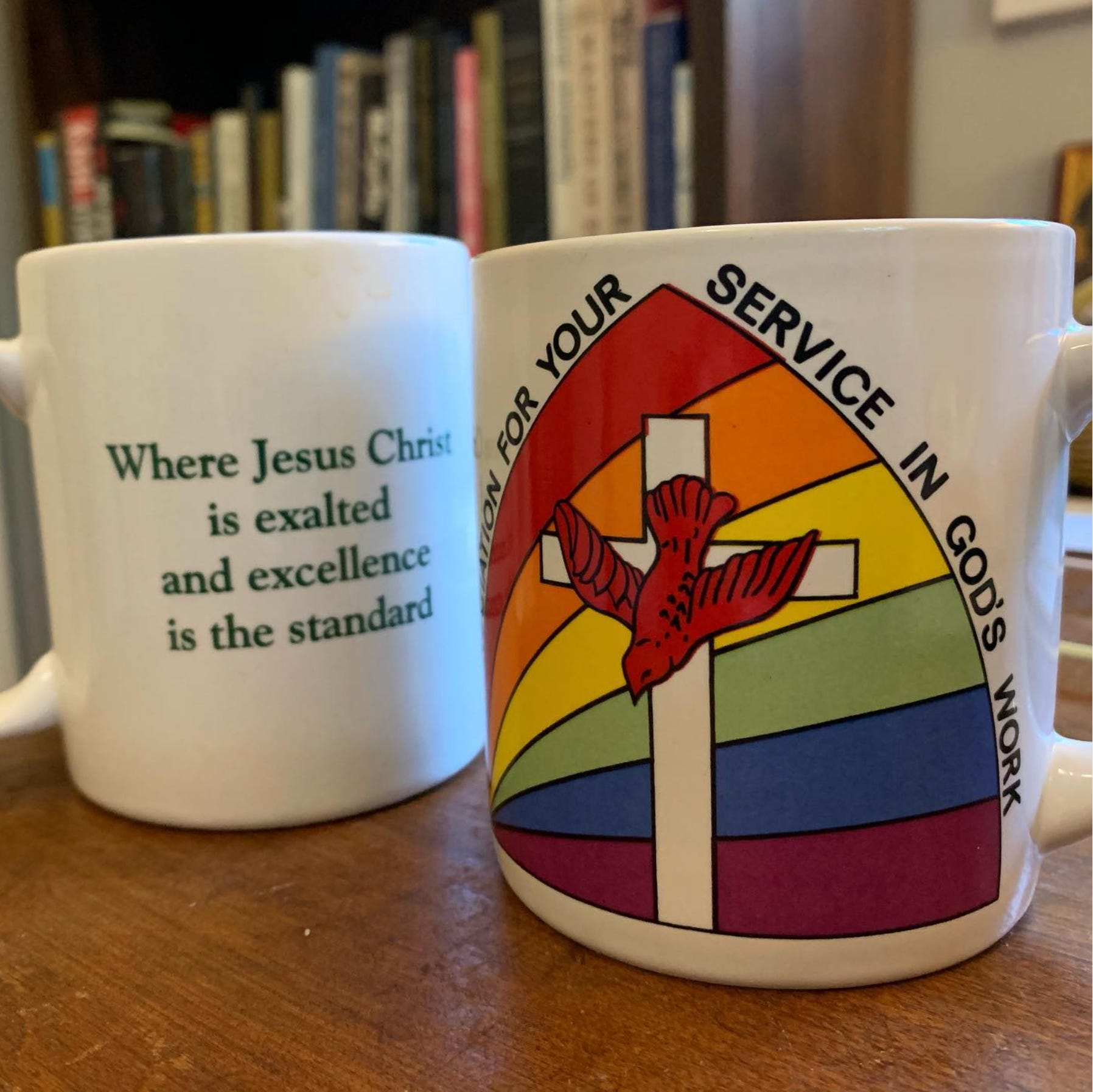
Latimer again, in the same sermon, encouraged people to pray for people, and specifically for their work:
Let everyone pray to God and desire others to pray for him that he may do the work of his vocation. For example a married man, let him pray unto God that he may love his wife, cherish her, honor her, and bear with her infirmities. Likewise let all faithful servants call upon God, that they may do the duty of their vocation.
… let magistrates be in prayer. There is no doubt they have need, for they have a great charge committed to them by God, therefor they need God’s help. Yet also let every good subject pray for the magistrates, that they may do their duties according to God’s will and commandments.
There’s no doubt this is a good prayer. When one faithful person prays for another: such prayer shall not be in vain.
I would like to do this more—pray that my pastor pastors well, my legislator legislates well, my doctor doctors, my garbage man mans garbage, and so on.
If you pray for me, do pray that I would carry the responsibility of journalism well, even (especially) when it would be easier and more pleasant not to.
🙏🏻
“And whosoever will not follow, but lies still in sin, him we ought we to strike and not to spare. . .” Latimer sure does not sound like he understood the compassion and mercy of our Lord.